
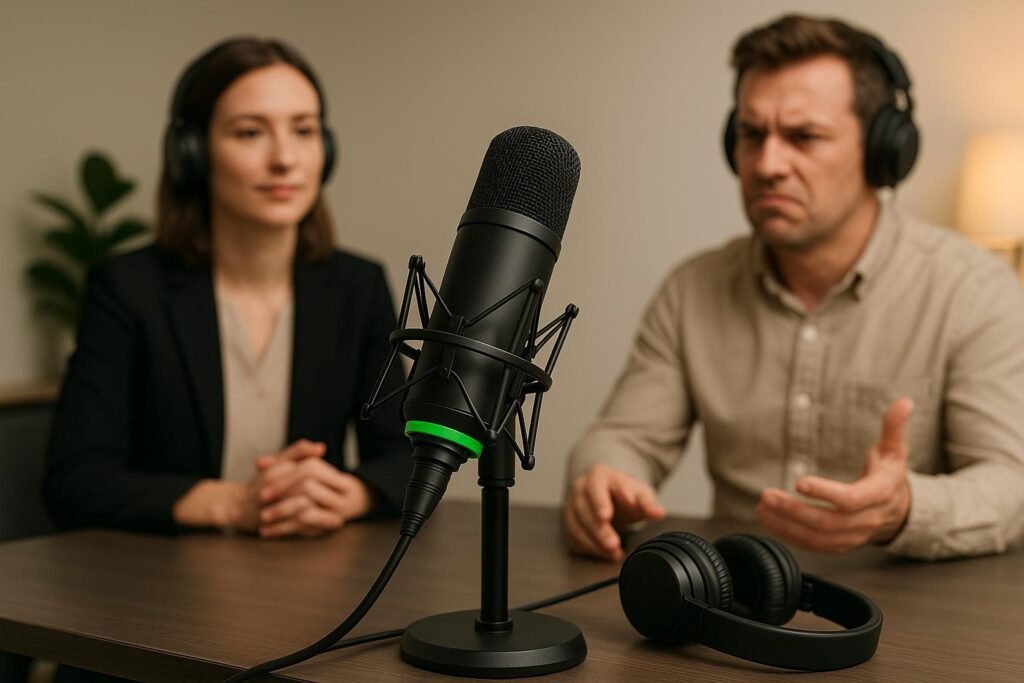
If you’re a podcaster, dealing with challenging guests is inevitable. Whether they show up unprepared, dominate the conversation, or stray off-topic, these situations can disrupt your show. But with the right strategies, you can manage these moments effectively and even improve your listener experience. Here’s a quick summary of the five key tips:
- 5+ Episodes A Day?! Pro Podcast Interview Tips From a Journalist | Podcasting Amplified
- 1. Research Your Guest Before the Interview
- 2. Set Clear Rules and Expectations
- 3. Stay in Control and Guide the Conversation
- sbb-itb-0e595bb
- 4. Stay Professional During Tense Moments
- 5. Review and Make Decisions After Recording
- Interview Strategy Comparison Table
- Conclusion
- FAQs
- What should I do if a podcast guest keeps going off-topic during the interview?
- How can I handle a confrontational podcast guest during an interview?
- How should I decide whether to release or hold back an episode if a guest’s input doesn’t align with my podcast’s goals?
- Related Blog Posts
- Research thoroughly: Understand your guest’s background, past interviews, and potential sensitive topics to prepare targeted questions.
- Set clear expectations: Share your interview format, goals, and boundaries beforehand to create a structured framework.
- Stay in control: Use polite interruptions and reframed questions to guide the conversation back on track.
- Maintain professionalism: Handle tense moments calmly with active listening and neutral language to preserve the flow.
- Review post-recording: Assess the episode’s quality, edit as needed, and decide if it aligns with your audience’s expectations.
5+ Episodes A Day?! Pro Podcast Interview Tips From a Journalist | Podcasting Amplified
1. Research Your Guest Before the Interview
Managing challenging guests starts long before you hit the record button. The key? Do your homework. In fact, 70% of podcast listeners say they prefer hosts who come prepared and demonstrate a solid understanding of their guests[4].
Begin with their professional background. Dive into their career path, current roles, and industry expertise. This will give you a solid grasp of their strengths and any biases that might come up during your conversation. A quick look at their LinkedIn profile, company bio, or recent accomplishments can paint a clear picture of their professional identity.
Next, explore their public perception. Look for news articles, online chatter, or even controversies they’ve been involved in. This step isn’t about digging up dirt – it’s about understanding any sensitive topics that could derail your discussion. If your guest has faced criticism or been part of polarizing debates, it’s better to know in advance so you can approach those areas thoughtfully.
Past interviews are another goldmine of information. Listen to a few of their recent podcast appearances or video interviews. Pay attention to how they respond to tough questions, whether they dominate the conversation, or if they have recurring themes they like to revisit. Interestingly, 70% of podcast hosts who analyze previous interviews report feeling more confident and in control during their sessions[4].
Don’t skip their social media activity. Platforms like Twitter, Instagram, and Facebook can offer a glimpse into their current mindset, recent events in their life, and topics they’re passionate about. This real-time perspective can help you connect with them on a deeper level and avoid surprises during the interview.
Once your research is complete, use your findings to craft a structured interview outline. Focus on creating open-ended questions that align with your episode’s goals and the guest’s expertise. Arrange your questions logically to guide the conversation, but also prepare backup questions to steer things back on track if the guest veers off-topic or becomes uncooperative. If possible, consider a pre-interview via phone, video call, or email. This helps you gauge their communication style, clarify expectations, and address any red flags before recording[5][1].
One podcast host shared how they spotted a guest’s tendency to redirect questions and prepared targeted follow-ups to keep the conversation balanced and productive[5].
For quick and effective research, tools like Google News and LinkedIn are your best friends. Additionally, resources like Sounds Debatable provide expert insights and practical examples to help you anticipate tricky guest behaviors. By doing your research and setting clear expectations, you’ll lay the groundwork for a smooth and engaging interview.
2. Set Clear Rules and Expectations
Once you’ve done your homework on your guest, it’s time to establish a framework that keeps the conversation on track and avoids potential pitfalls – like someone monopolizing the discussion or veering off-topic.
Start by explaining your interview format in a straightforward way. Let your guest know if the session will be a casual chat or a structured Q&A, how long it’s expected to last, and whether there will be any audience participation. Sharing a sample episode or a brief outline can go a long way in making your guest feel prepared and at ease during the recording[5][1].
Be upfront about your show’s purpose, who your audience is, and the main takeaways you’re aiming for. To align goals, ask your guest directly:
"What’s the key takeaway you’d like listeners to walk away with from our conversation?"
This simple but focused question helps set mutual expectations and often leads to a more impactful interview[3].
It’s also important to define any off-limits topics ahead of time to avoid awkward moments. Whether it’s steering clear of political debates, controversial opinions, or excessive product promotion, make your boundaries clear. For example, you might say, "Our audience values content that highlights expertise and personal experiences, so let’s keep the focus there rather than on promotional material."
Send a welcome email that includes a clear agenda and invite your guest to ask any questions. This small gesture sets a positive tone and shows that you’re invested in making the experience smooth for everyone involved[2].
Consider using a pre-interview questionnaire to outline expectations. Include notes like speaking clearly, avoiding interruptions, and staying on topic. For instance, you might say: "Please aim to keep your answers concise, and let me know if you need a break during the chat."
Finally, follow up with an email summarizing the agreed-upon guidelines and ask for confirmation. This extra step not only reinforces the rules but also builds trust and sets the stage for a productive conversation[1].
3. Stay in Control and Guide the Conversation
Even with careful preparation and clearly set expectations, some guests might still veer off course. When that happens, it’s important to step in swiftly and steer the discussion back on track – without making the guest feel dismissed.
Polite interruption is a skill worth mastering. Use transitional phrases that both acknowledge the guest’s input and gently redirect the focus. For example, you could say, "That’s an interesting point; let’s circle back to the main question", or "I appreciate that insight, but let’s tie it back to [specific topic]." This approach keeps the conversation respectful while ensuring it stays relevant.
If a guest becomes evasive or uncooperative, your questions become an essential tool. Restate your episode’s goals and reframe your questions to guide the dialogue. For instance, you might say, "You mentioned X earlier – how does that connect to Y?" Open-ended questions like these encourage more thoughtful responses while keeping the conversation aligned with your objectives.
In cases where the discussion goes completely off the rails or a guest becomes combative, don’t hesitate to pause or stop the recording. Statistics suggest that halting an overly off-topic or contentious guest happens in about 20–30% of interviews, and doing so often results in a clearer, more focused final episode [1].
Your tone and pacing also play a role. Brief pauses and subtle non-verbal cues – like leaning forward or nodding – can signal a shift in focus without interrupting the flow. And remember, any awkward moments can often be smoothed out during post-production. Tools like Riverside.FM, which record separate audio tracks for each participant, give you the flexibility to clean up and refine conversations involving multiple voices.
The goal is to maintain a collaborative tone while keeping editorial control. By balancing directness with courtesy and using language that resonates with your audience, you can navigate even the trickiest conversations and create episodes that are both engaging and purposeful.
sbb-itb-0e595bb
4. Stay Professional During Tense Moments
When an interview starts to heat up, how you handle those moments can shape the entire episode. Staying composed and focused is crucial for steering the conversation back on track and preserving the integrity of your show.
One simple but effective tool is deep breathing. The 4-4-4 technique – inhale for four counts, hold for four, and exhale for four – can help you stay calm and steady your voice, even if the guest becomes agitated. It’s a quick way to regain focus and maintain control.
Active listening is another powerful way to defuse tension. If a guest becomes defensive or argumentative, resist the urge to interrupt or correct them right away. Instead, give them your full attention and paraphrase their points to show you’re listening. For example, you might respond with, "I can tell this is important to you – could you explain more about how it ties into our discussion?" This not only helps the guest feel heard but also opens the door for a more productive exchange.
Your choice of words is equally important in these moments. Avoid language that could escalate the situation, and instead aim for neutral, validating phrases. Saying things like, "I see your perspective; let’s explore that further", or "I understand what you’re saying", acknowledges their viewpoint without necessarily agreeing. This approach keeps the conversation constructive and respectful.
Sometimes, though, neutral language and active listening aren’t enough. If a guest becomes overly confrontational or refuses to engage professionally, don’t hesitate to hit pause. Take a moment to reset, and if the issues persist, you may need to end the interview or edit out problematic sections later. Your audience values thoughtful, respectful dialogue, and unresolved conflict can hurt the overall experience – and your ratings.
5. Review and Make Decisions After Recording
Once you’ve finished recording, take the time to review the entire episode. Listen carefully to assess whether it meets your standards and serves your audience’s needs. This step is crucial – it can mean the difference between delivering content that enhances your brand and releasing something that could harm your reputation.
Pay close attention to the audio quality, the flow of the conversation, and how relevant the content is to your listeners. Take detailed notes, including timestamps for edits and any issues that stand out. Ask yourself: Did the guest offer insights your audience can genuinely use? Did the discussion stay focused, or did it wander into areas that don’t add value? Track moments where the guest may have gone off-topic or dominated the conversation, and use these notes to improve your guest selection and interview strategies for future episodes.
When tough decisions arise, trust your instincts about your show’s quality. If the guest strayed too far from the topic or technical issues disrupted the recording, significant editing may be required. In some cases, you might need to cut large portions of the episode to preserve its value.
"When you’re focused on improvement, clarity, and taking your podcast to the next level, you need more than generic advice – you need expertise that delivers real answers, fast. A paid consulting session with a podcast expert gives you exactly that. You’ll get direct, personalized guidance tailored to your unique goals and challenges."
After your review, decide whether the episode is worth publishing or if it’s better to withhold it. If you choose not to release it, communicate this decision professionally to your guest. Be honest but respectful, framing the choice as one focused on maintaining the quality of your show and the trust of your audience, rather than as a critique of their performance.
Take lessons from every challenging interview. Reflect on what went well, what didn’t, and any specific issues you encountered. Were there red flags you missed during pre-interview prep? Could your expectations have been communicated more clearly? These notes will be invaluable for refining your approach to guest selection and interview preparation in the future.
Always prioritize your audience’s experience. Publishing a poorly executed episode can lead to negative reviews on platforms like Apple Podcasts, which could harm your show’s rating and erode listener trust [5]. It’s better to skip an episode entirely than to risk damaging the reputation you’ve worked so hard to build. This reflective process not only safeguards your show’s quality but also improves how you handle future challenges.
For podcasters looking for expert advice on post-production decisions, platforms like Sounds Debatable provide tailored insights and examples from successful shows. Their services can help you navigate tricky situations while ensuring your podcast continues to meet the high standards your audience expects.
Interview Strategy Comparison Table
In high-pressure recording scenarios, quick decisions can make all the difference. Each strategy comes with its own strengths and challenges, and knowing when to use them can keep your interviews focused and engaging.
Here’s a breakdown of actionable techniques to help you navigate tricky moments during interviews:
| Strategy | Best Used For | Pros | Cons | Example Approach |
|---|---|---|---|---|
| Polite Interruptions | When guests stray off-topic or dominate the conversation | Keeps the interview on track; ensures your key questions are addressed; holds audience interest | Can feel uncomfortable; risks upsetting the guest; requires tact and quick thinking | "That’s a great point, but let’s circle back to this first", or "You’ve got some great insights – let’s explore that in a moment." |
| Changing Topics | When guests are rambling or the discussion loses focus | Smoothly redirects the conversation; brings new energy to the discussion | May come across as dismissive; could disrupt the flow; requires solid follow-up questions | Use prompts like, "That’s interesting – can you tell us more about [new topic]?" or reference listener-submitted questions. |
| Stopping the Recording | Technical difficulties, offensive remarks, or unmanageable disruptions | Preserves the quality of the show; allows for a reset; avoids frustrating listeners | Breaks the flow; could damage rapport with the guest; extends recording time | Pause for issues like poor audio or if a guest violates agreed boundaries. Clearly reset expectations before resuming. |
These strategies are an essential part of managing interviews effectively, complementing the preparation and in-the-moment adjustments discussed earlier.
Experienced hosts adapt their approach based on the guest’s behavior. They rely on preparation, tactfully redirect conversations when needed, and are unafraid to pause the recording to maintain the integrity of the show.
Conclusion
Handling tough interviews becomes much easier with the right preparation, clear communication, and a professional approach. By doing your homework and setting clear expectations upfront, you can create a smoother experience for both you and your guest. Sharing your interview structure ahead of time and establishing boundaries can go a long way in building confidence before you even hit record. And don’t forget to reflect and tweak your approach after each session – it’s a simple but effective way to keep improving.
Keeping the conversation on track requires a balance of assertiveness and tact. Redirecting a wandering discussion back to your planned topics is a skill that gets better with time, but you don’t need to rely solely on trial and error to get there.
After the interview, reviewing the recording carefully helps maintain your podcast’s reputation. Thoughtful editing ensures the episode meets your quality standards and delivers value to your audience. For tailored advice on refining your podcasting skills, consider exploring the resources available at Sounds Debatable.
Sounds Debatable specializes in curated podcasting tools and expert advice to speed up your learning curve. Trusted by companies like Indeed and the creators of Who Smarted, their services offer personalized guidance on managing challenging interviews and improving your podcast quality.
"Life’s too short for trial and error. Book a paid consulting session with a podcast expert – get your answers now, no searching, no wasted time, just excellence delivered."
- Sounds Debatable
Whether you’re dealing with guests who dominate the conversation, go off-topic, or cause technical hiccups, having a solid plan can make all the difference. With the right strategy, you can turn a stressful recording into an engaging interview that resonates with your audience.
FAQs
What should I do if a podcast guest keeps going off-topic during the interview?
If a guest tends to wander off-topic, start by gently guiding the conversation back. You can say something like, "That’s an interesting perspective, but let’s circle back to…". If it keeps happening, try summarizing their point and smoothly transitioning to the next question to keep things on track.
Being prepared is crucial. Before the interview, share the structure and main topics so the guest knows what to expect. During the conversation, active listening paired with polite redirection can help ensure the discussion stays aligned with your objectives.
How can I handle a confrontational podcast guest during an interview?
If a guest becomes confrontational during your podcast, keeping your composure is key. Stay calm, maintain a professional demeanor, and acknowledge their perspective without fueling the tension. A simple strategy like active listening can go a long way – it shows the guest that their viewpoint is being heard, even if you don’t share the same opinion. This approach can often help de-escalate the situation.
Should the conversation continue to spiral, don’t hesitate to pause the recording. Use this break to address the issue privately, allowing both parties to reset and refocus. Remember, as the host, you set the tone for the interview. It’s perfectly acceptable to establish boundaries to ensure the conversation stays respectful and engaging for your audience.
How should I decide whether to release or hold back an episode if a guest’s input doesn’t align with my podcast’s goals?
Deciding whether to release an episode comes down to how well it aligns with your podcast’s purpose and values. If a guest’s contributions feel off-course, think about whether the episode still offers something worthwhile to your audience or fits your brand’s message. Ask yourself: Does this episode inform, entertain, or engage my listeners in a way that matters?
If the content falls short of your expectations, you have options. You might choose to hold back the episode entirely or rework it by editing out the parts that don’t sit well. It’s also important to have an open and respectful conversation with your guest – share your concerns and discuss potential solutions. At the end of the day, trust your gut to uphold the quality and vision of your podcast.