
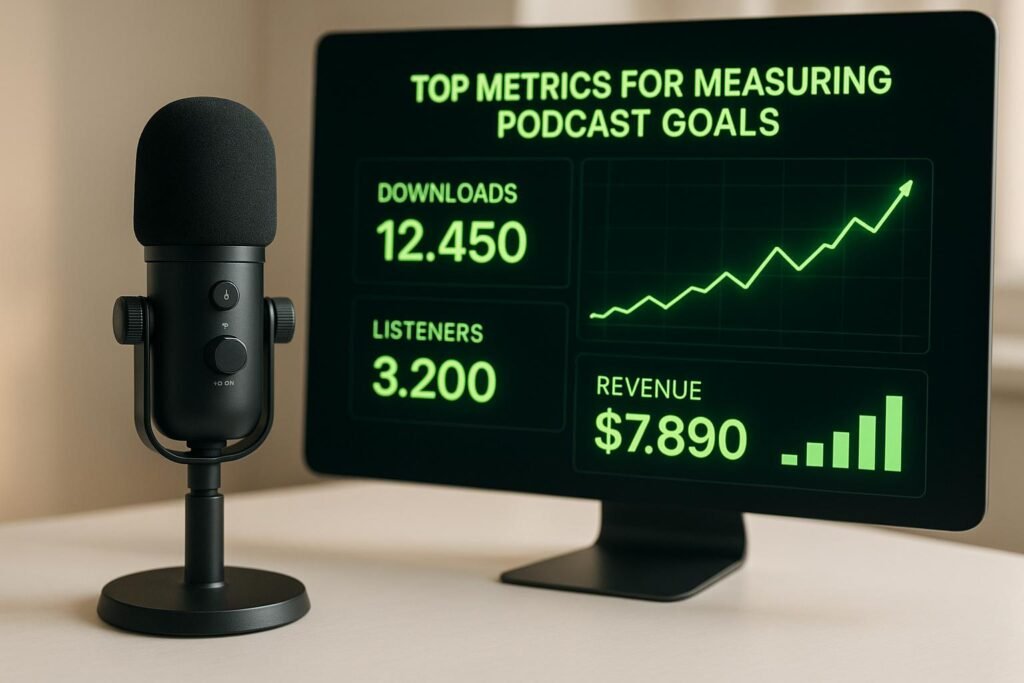
Tracking the right podcast metrics is key to growing your audience, improving engagement, and boosting revenue. Here’s what you need to know:
- Analytics That Matter: Understanding Your Podcast Metrics | The Podcast Consultant
- Audience Metrics: Downloads and Listener Numbers
- Downloads vs. Listeners: What Each Metric Means
- Episode Downloads and 30-Day Performance Standards
- Engagement Metrics: Retention and Completion Rates
- Listener Retention Rates
- Episode Completion Rates
- Demographics and Geographic Data
- Gathering Demographic Information
- Geographic Distribution Analysis
- sbb-itb-0e595bb
- Revenue and Monetization Metrics
- Revenue and Advertising Performance Tracking
- Podcast ROI Calculation
- Using Curated Resources for Podcast Growth
- Getting Expert Insights from Sounds Debatable
- Finding the Right Metric Tracking Tools
- Conclusion
- FAQs
- How can I tell the difference between podcast downloads and actual listeners to better understand my audience size?
- How can I boost listener retention and ensure more people finish my podcast episodes?
- How can demographic and geographic data shape my podcast’s content strategy and attract sponsors?
- Related Blog Posts
- Downloads vs. Listeners: Downloads show interest but can be inflated; unique listeners reflect actual audience size.
- Retention and Completion Rates: Retention shows how long people stay tuned, while completion rates reveal how many finish an episode.
- Demographics and Geographic Data: Understand your audience’s age, location, and interests to tailor content and attract sponsors.
- Revenue Metrics: Monitor revenue streams, CPM rates, and ROI to gauge financial success.
Analytics That Matter: Understanding Your Podcast Metrics | The Podcast Consultant
Audience Metrics: Downloads and Listener Numbers
To understand your podcast’s reach, you need to focus on two key metrics: downloads and listener numbers. These metrics provide insights into different aspects of your audience’s behavior, helping you gauge both interest and engagement. Let’s break down what each one means and how they differ.
Downloads vs. Listeners: What Each Metric Means
Downloads indicate how many times an episode has been saved or accessed. While this shows initial interest, it can sometimes be misleading. Bots, repeated downloads, or automatic subscriptions that never get played can inflate these numbers[2]. On the other hand, listeners or streams provide a clearer picture of engagement, reflecting how many people actually consumed your content[4].
Unique listeners go a step further by counting distinct individuals who played your episodes. This helps eliminate inflated numbers caused by repeated plays and gives a better sense of your podcast’s actual reach[1][3][4]. Meanwhile, subscriber counts show the number of people who’ve chosen to follow your podcast, which is a good indicator of audience loyalty and interest in future episodes[2].
Here’s a quick comparison of these metrics:
| Metric | What It Measures | Limitations | Best Use Case |
|---|---|---|---|
| Downloads | Number of times an episode is saved | May include non-listens and duplicates | Gauging interest/reach |
| Listeners | Number of unique plays/streams | May not capture offline downloads | Measuring actual audience |
| Subscribers | Opt-in audience for new episodes | May not reflect active listening | Tracking loyal audience |
Episode Downloads and 30-Day Performance Standards
Tracking downloads at the episode level can provide a more detailed view of performance trends compared to looking at overall totals[2]. The first 30 days after an episode’s release are particularly important, as this is when most downloads typically occur. This period is essential for assessing initial audience response and comparing your podcast to industry benchmarks[2][4].
Analyzing 30-day performance across episodes can reveal patterns in what resonates most with your audience. For example, certain topics, formats, or guest appearances might consistently drive higher interest[2]. Use these insights to fine-tune your content strategy. While trending topics might see a quick spike in downloads, evergreen content often maintains a steady performance over time.
This approach not only helps you set realistic goals based on your podcast’s niche but also prepares you for conversations with advertisers. Unique listener data, in particular, is a key metric for demonstrating your true audience size, which is critical for monetization opportunities[4]. These metrics set the stage for diving deeper into engagement insights in the next section.
Engagement Metrics: Retention and Completion Rates
Download and listener numbers can tell you how many people are checking out your podcast, but engagement metrics dig deeper – they show how well your content actually connects with your audience. Downloads might measure curiosity, but retention and completion rates reveal whether your listeners are sticking around and truly engaging with your content. These metrics go beyond surface-level stats to highlight the strength of your show.
Why does this matter? High engagement doesn’t just reflect quality – it’s also a key factor in your podcast’s growth. Sponsors look for shows with loyal, attentive audiences, and these metrics help you spot what’s working and where you can improve. They offer a window into real listener behavior, giving you actionable insights.
Listener Retention Rates
Retention rate measures how much of an episode your audience listens to before tuning out. It’s expressed as a percentage of the episode’s total length. To calculate it, divide the total listening time by the episode’s length, then multiply by 100. For example, if your 30-minute episode generates 21,000 minutes of listening time, your retention rate is 70% [4].
Most analytics platforms provide retention curves, which show you exactly where listeners drop off. This data is invaluable for identifying which parts of your episode hold attention and which might need improvement. As a rule of thumb, retention rates between 40–60% are average, while anything above 75% signals highly engaging content [4]. If you notice consistent drop-offs – like in the first minute or during a particular segment – it might be time to tweak your introductions or pacing.
Modern tools even offer second-by-second breakdowns and heatmaps, giving you a detailed look at listener behavior. These insights can guide you in creating episodes that keep your audience hooked from start to finish.
Episode Completion Rates
While retention rates track how long listeners stay engaged, completion rates measure the percentage of people who finish an episode entirely. This metric reveals how compelling your content is overall. For instance, if 100 people start an episode and 40 stick it out until the end, your completion rate is 40%.
A completion rate above 60% is considered strong, with top-performing podcasts often hitting 80% or more [4]. That said, episode length plays a big role. Shorter episodes (under 20 minutes) tend to have higher completion rates, while longer episodes (over an hour) may see more drop-offs.
| Metric Type | What It Measures | Industry Benchmark | Best Use Case |
|---|---|---|---|
| Retention Rate | % of episode heard before drop-off | 40–60% average, 75%+ excellent | Pinpointing weak segments |
| Completion Rate | % of listeners finishing an episode | 60%+ strong, 80%+ exceptional | Evaluating overall content quality |
These engagement metrics are becoming increasingly important as advertisers and sponsors prioritize active, attentive audiences over sheer download numbers. High completion rates, in particular, can make your podcast more appealing for monetization since ads are more likely to reach listeners in full.
To boost engagement, dive into your analytics, experiment with episode lengths, and fine-tune your pacing. These insights not only help you retain your audience but also set you up for better monetization opportunities.
Demographics and Geographic Data
Once you’ve analyzed your engagement metrics, the next step is understanding who your audience is and where they’re located. Knowing your audience’s demographics and geographic details helps you make smarter content choices, refine your marketing strategy, and appeal to sponsors who are looking to target specific groups. This moves your podcast from a broad, untargeted approach to a focused, strategic effort.
In fact, over 60% of podcast advertisers in the U.S. request demographic and geographic breakdowns before committing to sponsorships [4]. If you can show sponsors that your audience is made up of women aged 30–45 in major metropolitan areas, you’re offering tangible value that aligns with their goals.
Gathering Demographic Information
Key demographic factors to focus on include age, gender, income, interests, and how your listeners discover your podcast. Many podcast hosting platforms – like Ausha, Riverside, or Descript – come with built-in analytics that provide valuable insights, such as age ranges, gender distribution, and even the types of devices your audience uses. But don’t stop there – listener surveys can offer additional depth. Use email campaigns, social media, or even in-episode mentions to encourage your audience to share more about themselves.
Tools like Typeform or Google Forms make it easy to ask questions about income, hobbies, career interests, and how they found your show. For example, if your podcast focuses on entrepreneurship, analytics and surveys might reveal that your primary audience consists of men aged 25–34 with a strong interest in technology, mostly living in urban hubs like New York and San Francisco. With this knowledge, you can tailor episodes to topics like tech startups and feature interviews with entrepreneurs from these cities.
To boost survey participation, consider offering small incentives and keep your questions straightforward. By cross-referencing survey responses with your platform analytics, you can validate your findings and ensure your data is accurate.
Geographic Distribution Analysis
Geographic data pinpoints exactly where your listeners are tuning in from – whether it’s by country, state, or even city. This information can guide localized content creation, targeted marketing efforts, and regional sponsorship opportunities.
Platforms like Ausha and Riverside make it easy to access detailed geographic breakdowns. For instance, if a large portion of your audience is based in California, you might adapt your content to include local stories, regional news, or partnerships with California-based businesses.
Hyper-local podcasting takes this concept further by focusing on specific cities or regions where your audience is concentrated. This approach can foster stronger community ties and attract local sponsors, such as restaurants, retailers, or service providers.
| Data Type | What It Reveals | Actionable Applications |
|---|---|---|
| Age & Gender | Core demographic profile | Adjust content tone, topics, and sponsor pitches |
| Income Level | Purchasing power | Determine premium pricing and sponsor categories |
| Geographic Location | Audience concentration | Develop local content, secure regional sponsors |
| Interests & Hobbies | Content preferences | Choose episode topics, guests, and marketing channels |
Geographic insights can also help you plan live events or meetups in cities where your audience is most active. Cities like Austin, Denver, or Seattle might be ideal for hosting live recordings or fan gatherings.
Make it a habit to review your analytics quarterly. This ensures that your content and marketing stay aligned with your audience’s evolving interests. When pitching to sponsors, present clear, detailed audience breakdowns that demonstrate how your listeners align with their target market. These insights, combined with other performance metrics, can strengthen your case for sponsorships and help you fine-tune your overall strategy.
sbb-itb-0e595bb
Revenue and Monetization Metrics
Tracking your podcast’s financial performance is more than just a numbers game – it’s about understanding what works and where to focus to boost your earnings. Revenue and monetization metrics let you see the impact of your strategies, helping you refine them for better results.
The Interactive Advertising Bureau (IAB) reports that podcast advertising revenue in the U.S. hit $2.2 billion in 2022, up from $1.7 billion in 2021 – a 29% year-over-year increase[2]. This growth underscores the income potential of podcasting and sets the stage for exploring specific ways to measure financial success.
Revenue and Advertising Performance Tracking
Monetization metrics go hand-in-hand with audience engagement, giving you a clear picture of your podcast’s financial health. Key metrics to track include total revenue, average revenue per episode, and CPM (cost per thousand impressions). Breaking down earnings by source – such as sponsorships, dynamic ads, affiliate marketing, or listener support – helps pinpoint the most effective revenue streams.
For sponsorship and ad revenue, tracking ad contracts, CPM rates, and ad impressions per episode is essential. Many podcast hosting platforms, like Libsyn, Anchor, and Megaphone, offer dashboards that calculate ad revenue automatically. For example, with a $25 CPM and 4,000 downloads, you’d earn $100 per episode.
In the U.S., podcast ad rates typically range from $18 to $50 CPM for host-read ads, depending on factors like audience size, engagement, and niche[4]. Premium podcasts with highly targeted audiences can command higher rates, while smaller shows might earn less. Consider "The Daily" by The New York Times, which brought in over $10 million in ad revenue in 2022 with an average CPM of $25, thanks to its loyal audience and polished content[2].
Affiliate marketing requires a different approach. Using unique promo codes or affiliate links tied to your podcast lets you track conversions and commissions. This method not only reveals which products resonate with your audience but also highlights the most profitable partnerships.
For listener support through platforms like Patreon or Apple Podcasts Subscriptions, monitor the number of supporters and total monthly contributions. These platforms often provide dashboards that make it easy to track recurring revenue – a more stable income source compared to ads.
| Monetization Method | Average CPM (USD) | Typical Revenue Range (USD) | Notes |
|---|---|---|---|
| Direct Sponsorships | $20 – $30 | $1,000 – $10,000 per episode | Higher rates for niche shows |
| Advertising Networks | $18 – $25 | $500 – $5,000 per episode | Easier to manage, lower CPM |
| Affiliate Marketing | N/A | $100 – $1,000 per episode | Varies by audience/product |
Podcast ROI Calculation
Understanding your podcast’s return on investment (ROI) is key to knowing if your efforts are paying off. To calculate ROI, you’ll need two numbers: total revenue from all monetization channels and total production costs, which include expenses like equipment, hosting, editing, marketing, and labor[4].
The ROI formula is straightforward:
ROI = (Total Revenue – Total Costs) / Total Costs × 100%
Here’s an example: If your podcast generates $2,500 in revenue and costs $1,000 to produce, your ROI is:
(2,500 – 1,000) / 1,000 × 100% = 150%. This means you earned 1.5 times your costs in profit.
Take "Serial" as an example. The show earned $1.75 million in its first season through a mix of sponsorships and ads, with a CPM of $20[2]. The creators used detailed analytics to optimize ad placements, showing how effective tracking can lead to better financial outcomes.
When calculating costs, it’s crucial to include everything: hosting fees, editing software, equipment depreciation, marketing expenses, and even your own time. Many podcasters overlook labor costs, which can significantly impact ROI.
Regularly analyzing ROI helps you make smarter decisions. For instance, if affiliate marketing delivers a 200% ROI while sponsorships only bring in 50%, it’s clear where your focus should be. Review ROI monthly or quarterly to identify trends and adjust your strategy.
Edison Research found that 54% of podcast listeners have made a purchase based on a podcast recommendation[6]. This highlights why tracking conversion rates and revenue sources is so important – your audience is not just listening; they’re acting on your recommendations.
If you’re serious about maximizing your podcast’s revenue, expert advice can make all the difference. Resources like Sounds Debatable offer proven strategies, case studies, and industry insights to help you avoid common pitfalls and fine-tune your approach. By adopting a systematic tracking method, you’ll be better prepared to grow your podcast’s financial success. Stay tuned for more insights in the next section.
Using Curated Resources for Podcast Growth
Podcast metrics can feel like a maze, especially when you’re juggling content creation and trying to make sense of the numbers. The upside? You don’t have to tackle it all alone. Curated directories and expert resources simplify the process, helping you focus on what really drives growth instead of getting bogged down in endless research.
These resources save you time by cutting through the noise. Instead of wasting hours sifting through generic advice, you can zero in on actionable insights tailored to your goals. That’s where expert-curated tools come in – they provide clarity and direction, so you can spend more energy creating great content.
Getting Expert Insights from Sounds Debatable
Sounds Debatable is a platform designed to provide podcasters with resources that actually work. Forget vague, one-size-fits-all tips – here, you’ll find strategies that have been tested and refined by successful podcasters.
The platform offers practical guides on key metrics like retention rates, audience demographics, and engagement. These resources break down complex analytics into manageable steps, making it easier to make informed, data-driven decisions. For instance, you’ll find step-by-step instructions for setting up key performance indicators (KPIs) and real-world case studies that show how others improved engagement by focusing on specific metrics.
What’s even better? The guidance is tailored to your goals. If you’re aiming to monetize, you’ll find resources on tracking revenue, measuring ad performance, and calculating ROI. On the other hand, if growing your audience is your main focus, there’s plenty of advice on acquiring new listeners, analyzing subscriber trends, and improving retention.
"Life’s too short for trial and error. Book a paid consulting session with a podcast expert – access expert answers without wasted time, just excellence delivered."
- Sounds Debatable
For those seeking a more personalized approach, Sounds Debatable offers one-on-one consulting sessions. Starting at $149 for 30 minutes or $195 for an hour, these sessions connect you directly with podcast experts who can help pinpoint the most important metrics for your specific goals.
The team behind Sounds Debatable has worked with high-profile clients like Indeed, Creator of Braingames, Who Smarted, and Ligue 1, as well as hundreds of other businesses. This impressive track record highlights the value of expert insights in optimizing podcast growth and performance.
Finding the Right Metric Tracking Tools
Expert advice is invaluable, but having the right tools to track your metrics is just as critical. Choosing an analytics platform that aligns with your needs can save you from wasting time on tools that don’t deliver.
Curated directories like Sounds Debatable evaluate analytics platforms based on reliability, usability, and the depth of insights they offer. This helps you avoid the trial-and-error process of testing multiple platforms. Some of their top recommendations include:
- Chartable: Known for its advanced attribution tracking, it’s ideal for podcasters focused on marketing campaigns and understanding what drives downloads.
- Podtrac: Offers detailed audience insights and industry benchmarking, making it a great choice for shows that want to dive deep into demographics.
- Riverside: Provides real-time analytics and engagement tracking, perfect for podcasters looking for immediate feedback on their episodes.
| Analytics Platform | Key Strengths | Best For |
|---|---|---|
| Chartable | Advanced attribution tracking, marketing campaign analysis | Growth-focused podcasters |
| Podtrac | Comprehensive audience insights, industry benchmarking | Shows needing demographic data |
| Riverside | Real-time analytics, engagement tracking | Podcasters seeking instant performance feedback |
Beyond tool recommendations, curated resources often include templates and frameworks to help you set up custom dashboards. They also offer tips on interpreting data, ensuring you’re not just collecting numbers but actually using them to make smarter decisions.
One major advantage of curated directories is their emphasis on metrics that matter. Instead of fixating on download numbers, they encourage a broader focus on retention and engagement – metrics that truly indicate long-term success for your podcast.
Conclusion
Keeping track of podcast metrics is like having a roadmap for your show’s success. By monitoring downloads, retention, audience demographics, and revenue, you can better understand how your podcast is performing and where it’s headed.
Instead of focusing on one number – like downloads – combine multiple metrics to get the full picture. For example, download numbers mean little without retention data to show how long people are actually listening[1][2][4]. Pairing retention rates with download stats offers a clearer view of audience engagement. Adding demographic data helps you identify who is tuning in, while tracking revenue ensures your podcast remains financially sustainable. Together, these metrics provide the foundation for smarter decisions.
This well-rounded approach allows for continuous improvement. Podcasts that consistently analyze and act on key metrics tend to experience stronger audience growth and higher engagement[1][2]. Plus, shows with solid retention and engagement data are more appealing to advertisers, which can directly boost monetization opportunities[4]. Seeking advice from experts can further refine your strategy and make your efforts even more effective.
Platforms like Sounds Debatable offer a treasure trove of tools, expert guidance, and case studies to help podcasters navigate this process efficiently.
"Life is too short to waste time guessing, testing, and hoping for results that never come. When you’re serious about growth, clarity, and taking your podcast to the next level, you need more than generic advice – you need expertise that delivers real answers, fast."
- Sounds Debatable
As podcasting continues to evolve, more creators are turning to advanced analytics to understand listener behavior and pinpoint where listeners drop off[5]. Whether you rely on self-guided analysis or expert advice, embracing data-driven strategies positions your podcast for lasting success.
FAQs
How can I tell the difference between podcast downloads and actual listeners to better understand my audience size?
Downloads and listeners are two separate metrics that help you gauge how your podcast is performing. Downloads represent how many times an episode file is saved or streamed, but it doesn’t necessarily mean someone listened to the entire episode. Listeners, however, refer to the unique individuals who actually engage with your content.
To better understand your audience size, focus on the unique listener data available through your podcast hosting platform or analytics tools. These tools can often exclude duplicate downloads, bot activity, or partial plays, offering a more accurate count of active listeners. Pair this information with other metrics, like play-through rates and listener demographics, to gain deeper insights into your audience and fine-tune your content strategy.
How can I boost listener retention and ensure more people finish my podcast episodes?
To boost listener retention and ensure more people finish your episodes, it’s all about crafting content that truly connects with your audience. Dive into your listener metrics to understand when people tune out – those drop-off points can reveal a lot. Use that insight to tweak your episodes and keep the momentum going.
Grab attention right from the start with an engaging intro, keep your episodes tight and focused, and make sure the content flows naturally from one point to the next.
You might also want to bring in some expert help. Tailored advice can be a game-changer for fine-tuning your strategy, improving production quality, and sharpening your branding. Plus, it can save you a ton of time by cutting out the guesswork.
How can demographic and geographic data shape my podcast’s content strategy and attract sponsors?
Understanding demographic and geographic data can unlock a deeper connection with your audience. By knowing details like their age, gender, or location, you can craft content that aligns with their interests and preferences. This might influence your choice of topics, the guests you invite, or even the tone and style of your podcast, making it more relatable and engaging for your listeners.
These insights aren’t just useful for content creation – they’re a game-changer when it comes to sponsorships. Advertisers often seek specific audience segments, and having detailed information about your listeners’ demographics and geographic spread makes your podcast stand out. If you can demonstrate strong reach in key areas or appeal to niche groups, you’ll position yourself as an attractive option for potential sponsors.