
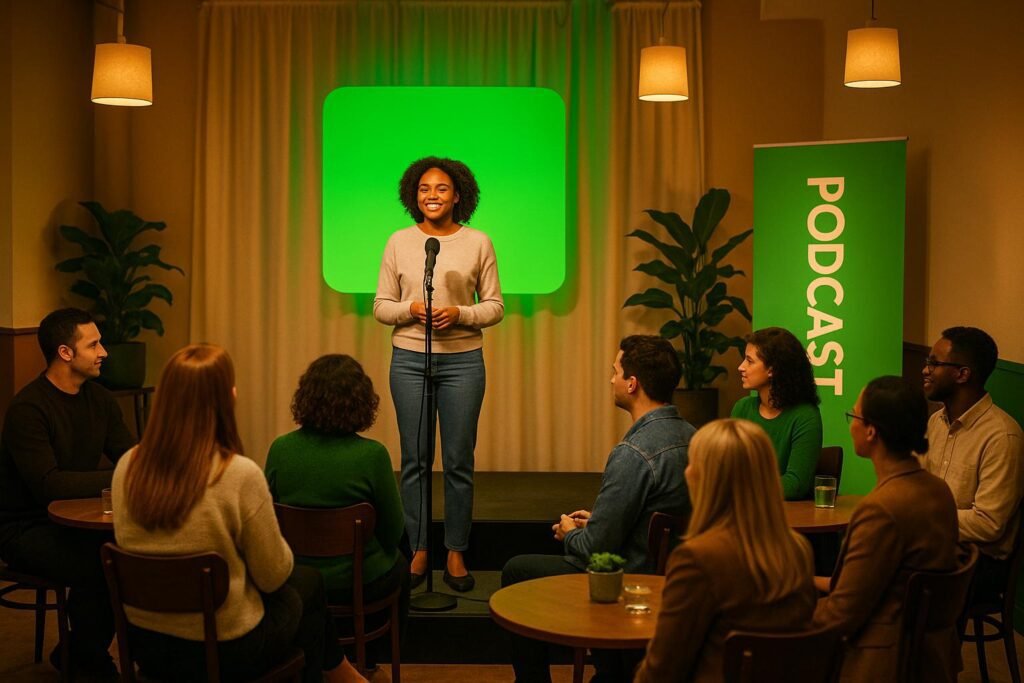
Planning a ticketed podcast event can boost revenue, grow your audience, and create lasting connections with listeners. Here’s a quick breakdown of how to make it happen:
- Tips For Planning And Hosting Memorable Live Podcast Launch Events
- Set Your Event Goals and Target Audience
- Choose Your Main Goal
- Know Your Target Audience
- Pick Your Event Format
- Choose Your Venue and Set Up Equipment
- Find the Right Venue
- Select Professional Equipment
- Make Your Event Accessible
- Price Your Tickets and Plan Sales
- Research What Others Charge
- Create Different Ticket Types
- Select a Ticketing Platform
- sbb-itb-0e595bb
- Market Your Event
- Promote to Your Current Listeners
- Make Promotional Materials
- Work with Guests and Partners
- Run Your Event Successfully
- Make a Timeline and Checklist
- Handle Event Day Operations
- Use Your Event Content Later
- Conclusion: Your Next Steps
- FAQs
- What are the best ways to promote a ticketed podcast event and boost attendance?
- What’s the best way to set ticket prices for my podcast event to balance affordability and profitability?
- What equipment do I need for high-quality audio at a live podcast event, and how can I prepare for technical issues?
- Related Blog Posts
- Set Goals: Decide if your focus is revenue, audience engagement, or brand growth. This shapes ticket pricing, venue size, and event format.
- Know Your Audience: Use listener data and surveys to understand preferences, locations, and willingness to pay.
- Choose a Format: Options include live recordings, Q&A sessions, panels, workshops, or hybrid events. Tailor the experience to your audience.
- Pick a Venue: Prioritize good acoustics, accessibility, and capacity. Test sound quality beforehand.
- Use Quality Equipment: Invest in reliable microphones, recorders, and backup gear to ensure professional audio.
- Price Tickets Smartly: Research similar events, use tiered pricing (e.g., early bird, general admission, VIP), and calculate your break-even point.
- Promote Effectively: Leverage your podcast audience, social media, email, and collaborations with guests or partners.
- Plan Operations: Create a detailed timeline, assign roles, and rehearse. Stay prepared for technical issues.
- Repurpose Content: Use event recordings for bonus episodes, social media clips, or premium content.
With proper planning, a live podcast event can deepen audience connections and generate new opportunities for your show.
Tips For Planning And Hosting Memorable Live Podcast Launch Events
Set Your Event Goals and Target Audience
Start by clearly defining your event’s purpose and who it’s for. These decisions will shape everything else, from the format you choose to how you market the event.
Choose Your Main Goal
Your event’s primary goal will dictate every key decision you make. If the focus is on revenue, aim for profitability by setting strategic ticket prices and choosing larger venues. If building your brand is the priority, create unforgettable experiences through smaller, high-quality events that elevate your podcast’s reputation. For strengthening audience connections, go for intimate settings and interactive formats that encourage personal engagement[1].
The goal you choose also determines which metrics you’ll need to track afterward. For revenue-driven events, keep an eye on ticket sales and profit margins. For brand-building efforts, focus on metrics like social media buzz, press coverage, and listener growth[3].
Know Your Target Audience
Use analytics to sharpen your understanding of your listeners. Dive into data like their age, location, interests, and listening habits[3]. Build detailed profiles that include their profession, income level, and podcast preferences. For instance, urban professionals will likely have different expectations than college students or retirees[1].
Surveys can help you gather direct input about your audience’s interest in live events, preferred formats, and how much they’re willing to pay for tickets[3].
Also, consider where your audience is concentrated. If your listeners are clustered in specific cities, in-person events make sense. But if they’re spread across the country, virtual or hybrid formats might be more practical[4]. These insights will guide you in choosing the best format for your event.
Pick Your Event Format
Once you’ve nailed down your goals and audience insights, it’s time to select an event format that aligns with both.
- Live recordings: Perfect for making your regular show feel like a personal experience, helping deepen the connection with your audience[1].
- Panel discussions: Ideal for business or educational podcasts, especially when networking and diverse expert opinions are key[1].
- Q&A sessions: Great for fostering direct interaction between hosts and listeners, especially if you already have an engaged audience[1].
- Workshops or educational sessions: These appeal to attendees looking to gain new skills, and they justify higher ticket prices by offering real learning value[1].
- Hybrid conferences: Combine multiple formats – live recordings, panels, and Q&A sessions – to deliver more value. These require more planning but can attract larger audiences. For example, small sessions suit 50–100 people, panels work for 100–500 attendees, and larger conferences with 500+ guests may need multiple sessions[1][4].
Keep in mind that 81% of attendees are willing to pay more for premium experiences like VIP access or exclusive content[2]. Adding unique elements – such as special guests, behind-the-scenes opportunities, or exclusive merchandise – can significantly boost ticket sales and overall revenue.
Lastly, think about how you can repurpose your event content. For instance, live recordings can become bonus podcast episodes, while workshop materials can be turned into premium educational resources. This way, your event continues to deliver value long after it’s over.
Choose Your Venue and Set Up Equipment
The venue and equipment you choose directly influence the success of your podcast event. From audio quality to the overall atmosphere, these decisions shape how your audience experiences the event – both in person and through recordings.
Find the Right Venue
When picking a venue, acoustics should be a top priority. Visit potential locations during events to evaluate sound quality, background noise, and echo. If possible, ask venue managers for recordings of past events to hear how podcasts or similar performances sound in their space.
Some venues, like The Bell House in Brooklyn, NY or The Hideout in Chicago, IL, are popular for podcast events. Why? They combine great acoustics, intimate settings, and experienced staff who understand live recordings. Other good options include small theaters, community arts centers, or co-working spaces with event facilities.
Make sure the venue matches your audience size. Smaller venues (around 200 seats) can create a close-knit feel and allow for higher ticket prices, while larger venues (up to 2,000 seats) offer more scalability if your audience demands it.
Don’t overlook the venue’s technical capabilities. Check for essentials like sufficient power, reliable Wi-Fi, and AV equipment. Some venues even come equipped with sound systems and lighting, which can save you time and effort during setup.
Accessibility is another key factor. Choose a location that’s easy to reach via public transit and offers accessible parking. Your venue should also provide wheelchair access and other accommodations to ensure all attendees can comfortably enjoy the event.
Once the venue is locked in, shift your focus to selecting the right equipment to ensure professional-quality audio.
Select Professional Equipment
High-quality audio equipment is non-negotiable for podcast events. Start with dynamic microphones like the Shure SM58, which are great for live settings because they minimize background noise. For mixing, budget-friendly options like the Behringer Xenyx series work well without breaking the bank.
Your recording setup should include a reliable recorder, such as the Zoom H6, which offers multiple input options and excellent recording quality. Always have a backup recorder on hand – technical failures happen, and it’s better to be prepared.
Here’s a quick breakdown of essential equipment and costs:
| Equipment Category | Essential Items | Price Range |
|---|---|---|
| Audio Input | XLR Microphones | $250 |
| Audio Processing | Audio Interface | $225 |
| Audio Monitoring | Wired Headphones | $100 |
| Recording | Multi-track Recorder | $400 |
| Accessories | XLR Cables, Stands | $100 |
If your event includes online streaming, you’ll also need a video camera and a streaming encoder like the Blackmagic ATEM Mini. A stable, high-speed internet connection is a must – test your streaming setup well in advance to avoid surprises.
Be prepared for the unexpected. Bring extra microphones, cables, batteries, and adapters. Assign a tech-savvy team member to monitor the equipment during the event, and have a contingency plan for common issues, like switching to a backup recorder if needed.
Before the event begins, conduct a thorough soundcheck. Test all microphones and speakers, and record a short clip to confirm audio clarity. This gives you time to fix any issues before the audience arrives.
With the technical side covered, focus on ensuring your event is accessible to everyone.
Make Your Event Accessible
Making your event accessible isn’t just about meeting legal requirements – it’s about creating a welcoming experience for all attendees. Start by ensuring your venue includes wheelchair ramps, accessible restrooms, and seating for those with mobility needs. Highlight these features in your promotional materials to keep attendees informed.
For those with hearing impairments, consider providing assistive listening devices. For larger events, offering live captioning or ASL interpreters can make a big difference and show your commitment to inclusivity.
Clear, well-placed signage is essential, especially for attendees with visual impairments or cognitive disabilities. Make sure pathways are well-lit and free of obstacles to help everyone navigate the venue easily.
For additional resources, check out Sounds Debatable. Their curated advice and expert insights can simplify your planning process, from venue selection to equipment setup[6][7].
Price Your Tickets and Plan Sales
Getting your ticket pricing right can make or break your event. Set prices too high, and you risk empty seats. Go too low, and you might not cover costs or hit your revenue goals. A smart pricing strategy not only aligns with your event’s objectives but also enhances the experience for attendees.
Research What Others Charge
Start by checking out similar events in your area. Look at live podcast shows, comedy performances, or other intimate gatherings that align with your format and audience. Platforms like Eventbrite and local listings are great for seeing what’s trending in your market.
For example, in major U.S. cities, general admission for live podcast events typically ranges from $20 to $75. Of course, these figures depend on factors like location, venue size, guest speakers, and event duration. Understanding these benchmarks helps you set a competitive price that reflects the value of your event while standing out in the market.
Create Different Ticket Types
A tiered ticketing approach is a win-win: it accommodates various budgets and lets you earn more from fans eager for premium experiences.
- Early bird tickets: Offer these at a 25–40% discount to build momentum and cover initial costs.
- General admission: This is your standard option, designed for most attendees and priced to cover your core expenses.
- VIP tickets: These can significantly increase your revenue per attendee. Research shows 81% of event-goers are willing to pay extra for exclusive perks[2]. VIP options could include front-row seating, signed merchandise, backstage access, or a meet-and-greet with hosts or guests.
Here’s an example of a tiered pricing model for a 200-seat venue:
| Ticket Type | Price | Perks | Quantity |
|---|---|---|---|
| Early Bird | $15 | Standard access; limited-time offer | 40 tickets |
| General Admission | $25 | Standard seating and access | 100 tickets |
| VIP Experience | $75 | Front row seating, signed merchandise, meet-and-greet | 60 tickets |
Before finalizing prices, calculate your break-even point by adding up all costs – venue, equipment, staffing, marketing, guest fees, and a buffer for unexpected expenses. For instance, if your total costs are $5,000 and you expect to sell 100 tickets, your break-even price is $50 per ticket. Pricing general admission at $65 would then yield a $1,500 profit if all tickets sell.
Select a Ticketing Platform
Your ticketing platform is more than just a sales tool – it’s the backbone of your event’s logistics. Look for one that integrates with U.S. payment systems, supports tiered pricing, and provides real-time sales tracking.
Popular options like Eventbrite, Ticketmaster, and Brown Paper Tickets offer features such as secure payment processing, mobile ticketing, and real-time analytics. However, these platforms differ in transaction fees, payout schedules, and customer support, so choose one that aligns with your needs.
Key features to prioritize:
- Tiered pricing and discount codes: Offer early bird discounts, promo codes for podcast listeners, or group rates.
- Real-time sales data: Monitor sales to adjust pricing, run flash sales, or add VIP options if demand spikes.
- Event day tools: QR code check-ins, mobile apps for entry, and attendee list management help streamline operations and create a smooth experience for guests.
Don’t forget to account for transaction fees when setting ticket prices. These fees can eat into your revenue if you don’t plan for them. Also, ensure the ticket-buying process is user-friendly. A complicated checkout process can lead to abandoned purchases, which means fewer attendees.
For more tips on pricing and platform selection, check out resources like Sounds Debatable. They provide examples and advice based on successful podcast events, helping you avoid mistakes and implement proven strategies that work.
sbb-itb-0e595bb
Market Your Event
Once you’ve set clear goals and nailed down your pricing strategy, it’s time to focus on marketing. A solid plan ensures your ticket sales align with expectations. To market your podcast event effectively, prioritize trusted channels and engage your core audience.
Promote to Your Current Listeners
Your podcast audience is your best promotional tool – they already trust your content. Start spreading the word about your event at least 6–8 weeks in advance.
Dedicate segments of your podcast to highlight the event, but avoid turning it into a hard sell. Instead, share the story behind why you’re hosting the event, what attendees can look forward to, and a few exclusive tidbits they’ll only get by joining in.
Tap into your email list, starting with your most engaged subscribers. Use clear subject lines like "Exclusive Early Access to [Event Name]" to grab attention. Include all the event details and a strong call-to-action. As the event date nears, send follow-up emails with reminders, emphasizing limited ticket availability or perks for attendees.
Social media is another key tool – but authenticity is critical. Post updates about the event on platforms like Instagram, Facebook, and Twitter, while continuing to share your usual content. Use event-specific hashtags and encourage your followers to share their excitement about attending.
To track what works best, use unique discount codes for each promotional channel. For instance, offer "PODCAST15" for listeners who hear about the event on your show, and "EMAIL20" for subscribers who click through your email. This lets you pinpoint which platforms drive the most ticket sales, so you can focus on what’s working.
Next, create tailored promotional materials to keep the buzz alive.
Make Promotional Materials
Your promotional content should fit naturally on each platform. For Instagram and TikTok, focus on vertical videos showcasing episode highlights or behind-the-scenes planning. Facebook, on the other hand, works well for longer posts and event banners that clearly display the date, time, and ticket info.
Audio teasers are especially effective for podcast events. Share behind-the-scenes clips, introduce key speakers or topics, and if you’ve hosted events before, include testimonials from past attendees. Roll out these teasers strategically, mixing in countdown posts and "last chance" messages to create urgency as the event approaches.
Consistency is key. Use the same colors, fonts, and logo placement across all materials to reinforce your branding. Always include essential details – event name, date, time, venue, and ticket purchase info – and make sure your call-to-action is bold and direct. "Get Tickets Now" leaves no room for doubt, unlike a vague "Learn More."
You can also create shareable content for your audience to post on their own feeds. Think quote graphics featuring upcoming guests, interesting stats related to your podcast topics, or interactive polls asking what people are most excited to hear about.
Work with Guests and Partners
Your event guests and partners can help you reach even more people. They likely have audiences that overlap with yours, making them ideal allies in promotion. Provide them with ready-to-use assets like graphics, sample social media posts, and audio snippets to make sharing easy.
Coordinate a promotional calendar with your guests and partners to stagger their announcements. This keeps the event in the spotlight over several weeks, rather than having everything hit at once.
Consider hosting live Q&A sessions or Instagram Live events with your speakers before the main event. These casual interactions give your audience a sneak peek of what’s in store and create more opportunities to drive ticket sales. Encourage your guests to mention the event on their own podcasts, and offer to return the favor by promoting their projects.
Cross-promotion with other podcasters in your niche is another smart move. Reach out to shows with similar audiences and suggest collaborations like guest swaps, joint giveaways, or shared social campaigns. After the event, share analytics and feedback to strengthen these relationships for future projects.
For more insights on effective promotional strategies, check out resources like Sounds Debatable. They offer curated advice and case studies from successful podcast events, helping you sidestep common pitfalls and focus on what works.
Lastly, keep an eye on your promotional efforts by tracking metrics. Monitor website traffic, social media engagement, email open rates, and – most importantly – ticket sales. Use this data to fine-tune your approach. For instance, if Instagram Stories are driving more traffic than Facebook posts, shift more energy to that platform.
Run Your Event Successfully
With tickets sold and your audience buzzing from effective promotion, it’s time to focus on executing your event seamlessly. Pulling off a successful event hinges on careful preparation, efficient operations on the big day, and making the most of your content afterward.
Make a Timeline and Checklist
Start planning your timeline 8–10 weeks before the event. Break it into weekly milestones and shift to daily tasks as the date approaches. Use tools like spreadsheets or project management apps to track progress and assign tasks if you’re working with a team.
Your timeline should include key milestones like finalizing the venue contract, confirming speakers, securing backup equipment, and launching your final marketing push. Around six weeks out, prioritize technical preparations: book an audio engineer, test your recording setup, and create a detailed run-of-show document outlining every segment’s timing. This level of planning ensures your live podcast runs smoothly and leaves a lasting impression.
Three weeks before the event, focus on logistics. Confirm headcounts with the venue, finalize catering if needed, and conduct a full technical rehearsal. This rehearsal should test all microphones, recording devices, and any streaming setups.
In the final week, handle details like printing signage, preparing check-in materials, and packing an emergency kit with essentials like extra batteries, cables, adapters, power strips, duct tape, and basic tools. Assign clear roles to team members or volunteers so everyone knows their responsibilities.
The Podfest Expo in Orlando in 2022 showcased the importance of meticulous planning. Their team used an extensive operations checklist and assigned specific roles for check-in and speaker coordination, achieving a 98% attendee satisfaction rate[2][5].
Handle Event Day Operations
Arrive at least three hours early to set up and troubleshoot any last-minute issues. Start with a thorough soundcheck – test every microphone, recording device, and speaker, and capture a quick test recording to confirm quality.
Streamline the check-in process to avoid delays at the entrance. A digital check-in system or ticketing app can make entry faster and more efficient. Station staff at key points to greet guests, verify tickets, and direct attendees to their seats. Clear signage is essential to help guests navigate the venue easily.
Set up a private staging area for speakers and guests. This space allows them to prepare, review notes, and relax before going on stage. Hold a brief pre-event meeting with all speakers to review the schedule, address any last-minute changes, and answer questions about timing or logistics.
Assign a stage manager to oversee transitions between segments and cue speakers when it’s their turn. This person should have a copy of the detailed timeline and be prepared to adjust if a segment runs over or finishes early. Keep some filler content – like an extra audience question or a short story – ready to handle unexpected gaps.
Prepare for common challenges like microphone glitches, late arrivals, or unplanned audience needs. Have backup equipment on hand, build buffer time into your schedule (e.g., 15 minutes between major segments), and train your team to handle disruptions calmly.
Designate someone to monitor your recording throughout the event. This person should keep an eye on audio levels, back up recordings periodically, and ensure all equipment stays connected and functional.
Use Your Event Content Later
Once your event wraps up, the real value lies in the content you’ve captured. Plan ahead to repurpose this material for your podcast and audience in the weeks and months to come.
Record everything: main room audio, individual speaker microphones, and audience questions. Having separate tracks gives you flexibility during editing and ensures cleaner final episodes.
Edit the full recording into one or more podcast episodes. Add your usual intro and outro while keeping the live energy and audience reactions intact – this gives listeners who missed the event a taste of the experience. Many podcasters turn live Q&A sessions into bonus episodes, which are often fan favorites.
Pull short clips for social media. Highlight memorable quotes, funny moments, or insightful exchanges in 30- to 60-second videos. These clips perform well on platforms like Instagram Stories, TikTok, and Twitter, helping promote your podcast and future events.
Offer exclusive behind-the-scenes content to your email subscribers or premium supporters. This could include extended interviews, pre-event setup footage, or candid moments that didn’t make the final cut.
Repurposing event content can have a major impact. Event organizers who turn live recordings into podcast episodes often see a 15–20% increase in subscribers in the following quarter[2].
Securely store your raw files and back them up immediately after the event. Use cloud storage and keep local copies until uploads are verified, ensuring you’ll have access to the files for future use.
Send a thank-you email to attendees within 48 hours of the event. Include links to highlights, photos, and details about when the full recording will be available as a podcast episode. This follow-up keeps your audience engaged and shows appreciation for their support.
Finally, collect feedback while the event is still fresh in attendees’ minds. Send out a short survey asking what they enjoyed, what could be improved, and what topics they’d like to see next time. This feedback is invaluable for planning future events and strengthening your connection with your community, setting the stage for continued audience growth and podcast success.
Conclusion: Your Next Steps
This guide has walked you through setting clear goals, locking in the ideal venue, pricing tickets effectively, and executing a well-organized event. With the planning phase complete, your next priority is timely and focused execution.
Every decision should tie back to your goals – whether you’re aiming to build community, celebrate milestones, or boost revenue. Secure your venue as soon as possible and kick off ticket sales with a pricing strategy that adapts to how your audience responds in real time.
Give yourself enough time to finalize the venue, confirm speakers, and launch ticket sales. Assign tasks clearly within your team and stick to your timeline to minimize last-minute stress.
Keep an eye on key metrics such as ticket sales, social media engagement, and early feedback. If sales slow down, consider adjusting prices or ramping up your promotions. For ongoing challenges – whether it’s monetization or event production – seeking professional advice can help you find quick, effective solutions.
As Sounds Debatable says, "Life’s too short for trial and error. Book a paid consulting session with podcast expert – get your answers now, no searching, no wasted time, just excellence delivered."[8]
Whether you’re working on audience engagement, monetization strategies, or improving production quality, expert guidance can offer tailored solutions to match your specific needs. Armed with insights from your metrics and lessons learned, you’re set to make each event a stepping stone to even greater success.
Your event isn’t just about the day itself – it strengthens bonds with your audience and creates podcast content that lives on. Start today by locking in your event date and venue. The earlier you begin, the more time you’ll have to build excitement and perfect every detail.
Live events are becoming a key way for podcasters to connect with their audiences and grow their revenue. By following this roadmap and tapping into expert resources when necessary, you’re setting yourself up to create events that not only achieve financial success but also deepen the sense of community around your podcast for years to come.
FAQs
What are the best ways to promote a ticketed podcast event and boost attendance?
To draw a crowd to your ticketed podcast event, focus on strategic promotion and keeping your audience engaged. Start with a well-designed event page that clearly lists all the essential details – date, time, location, and ticket prices. This page should make it easy for potential attendees to get the information they need at a glance.
Next, turn to social media to spread the word. Post consistently, share behind-the-scenes glimpses, and encourage your followers to share the event with their own networks. This not only builds excitement but also expands your reach.
Consider teaming up with other podcasters or influencers in your niche to tap into their audiences. To sweeten the deal for potential attendees, offer early-bird discounts or exclusive perks like a meet-and-greet session.
And, of course, don’t overlook your own podcast as a promotional tool. Talk about the event during your episodes, and include strong calls-to-action that make it easy for listeners to grab their tickets.
What’s the best way to set ticket prices for my podcast event to balance affordability and profitability?
When setting the ticket price for your podcast event, start by calculating your expenses. This includes venue rental, equipment, and promotional efforts. Use these figures to establish a baseline price that covers your costs. Next, gauge your audience’s willingness to pay. You can do this by researching similar events or running a quick survey to gather insights.
Finding the right balance between cost and perceived value is crucial. Offering tiered pricing – like general admission and VIP packages – can help you appeal to a variety of budgets while optimizing your revenue potential.
Your pricing should align with the experience you’re offering. If you’re feeling uncertain, reaching out to a podcast expert for advice can help you fine-tune your strategy and strike the right balance between affordability and profitability.
What equipment do I need for high-quality audio at a live podcast event, and how can I prepare for technical issues?
To deliver top-notch audio quality at your live podcast event, you’ll need a few key pieces of equipment: dependable microphones, a mixer or audio interface, speakers for the audience, and recording gear to capture the session. Dynamic microphones are a smart choice because they help minimize background noise. Before the event, make sure to test all your equipment to ensure everything works seamlessly and delivers clear sound.
It’s also wise to plan for technical hiccups. Pack backup essentials like extra cables, batteries, and microphones. Having an audio technician or specialist on-site can make all the difference, as they can quickly address any issues that arise. And don’t skip the sound check – running a full test before the event starts will help you catch and fix any problems ahead of time.