
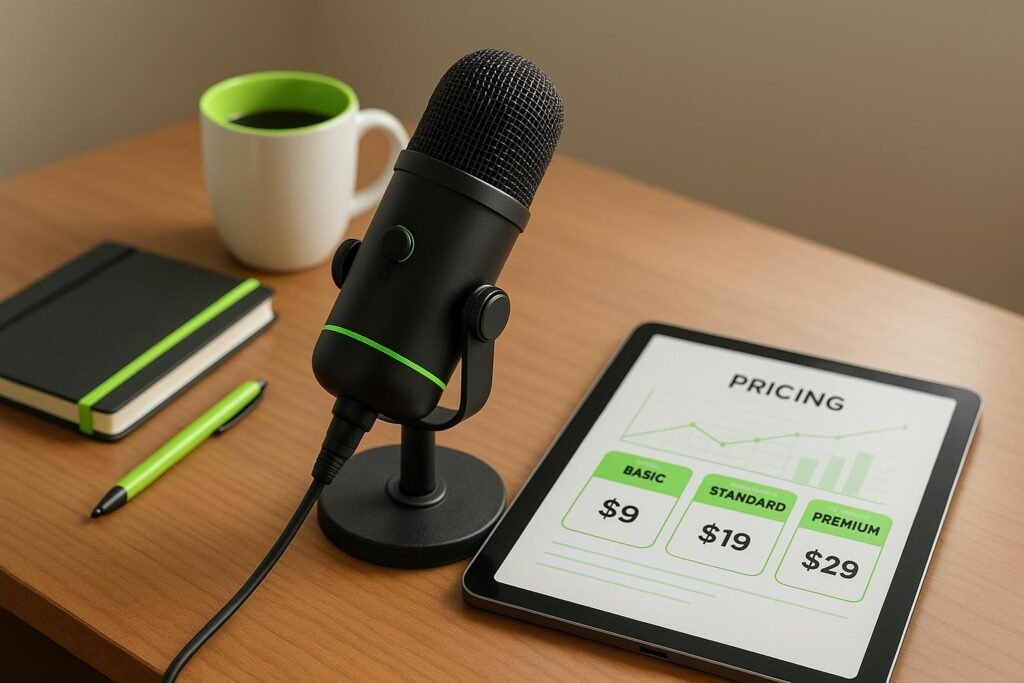
Pricing your podcast subscription is about balancing value and affordability while ensuring profitability.
- Controversial Topics in Subscription Pricing
- Types of Podcast Subscription Models
- Single Podcast vs. Bundle Pricing
- Premium Content That Adds Value
- US Market Trends in Podcast Subscriptions
- How to Set the Right Price for Your Podcast
- Calculate Your Costs and Profit Margins
- Research Your Competition
- Choose a Pricing Model for Your Tiers
- Launch and Adjust Your Subscription Tiers
- Build Your Tier Structure
- Use Promotions and Keep Subscribers
- Track Performance and Change Prices
- sbb-itb-0e595bb
- Legal and Technical Requirements
- Platform Fees and Revenue Sharing
- Payment Processing and Tax Requirements
- Tools and Expert Help for Pricing
- Expert Guidance from Sounds Debatable
- Top Tools for Subscription Management
- Designing Pricing Comparison Tables
- Conclusion: Main Points to Remember
- Balance Affordability and Profit
- Use Available Resources for Success
- FAQs
- How can I choose the best subscription pricing for my podcast audience?
- What are the best strategies to grow and promote my podcast subscriptions?
- How do I account for platform fees and taxes when pricing my podcast subscriptions?
- Related Blog Posts
Here’s how to get started:
- Understand Costs: Calculate your monthly expenses (e.g., equipment, hosting, production time) and set a price that covers these while leaving room for profit.
- Research Competitors: Analyze similar podcasts in your niche to see what they charge and what they offer at different tiers.
- Choose a Pricing Model: Options include cost-plus (expenses + profit), value-based (benefits to listeners), or competitor-based (market positioning).
- Offer Subscription Tiers: Start with 2-3 simple tiers:
- Basic ($4.99–$6.99/month): Ad-free episodes and early access.
- Standard ($9.99–$12.99/month): Bonus content and exclusive episodes.
- Premium ($19.99–$29.99/month): Community perks, live Q&As, or exclusive merchandise.
- Use Promotions: Launch discounts, referral programs, and annual pricing to attract and retain subscribers.
- Monitor Performance: Track churn rates, revenue per subscriber, and conversion rates to adjust pricing as needed.
Key Tip: Factor in platform fees (e.g., Apple Podcasts, Spotify) and taxes when setting your price. Platforms may take 5–30% of your revenue, so plan accordingly.
Pricing isn’t static – test, analyze, and refine based on audience feedback and data. A well-structured strategy ensures your podcast remains profitable and appealing to listeners.
Controversial Topics in Subscription Pricing
Types of Podcast Subscription Models
Choosing a subscription model is a crucial step in determining how you price your content and connect with your audience. Each approach comes with its own set of benefits and challenges, directly influencing both your revenue and listener engagement.
Single Podcast vs. Bundle Pricing
A single podcast subscription focuses on one specific show and is typically priced at a moderate level in the US. This model is ideal if you have a dedicated audience for a particular topic or format. It lets you set a price that reflects the unique value of that show while giving you complete control over its quality and release schedule.
On the other hand, bundle pricing provides access to multiple podcasts under one subscription, often at a higher price point. While this approach can attract a broader audience, it requires consistent quality across all included shows. A single underperforming podcast in the bundle can diminish its overall appeal.
The choice between these models impacts your pricing strategy. Single podcast pricing allows for fine-tuned adjustments based on audience preferences, while bundle pricing requires a careful balance to maintain the value of the entire package. Beyond these models, premium content can elevate your subscription offering even further.
Premium Content That Adds Value
Premium features can make your subscription more appealing to listeners. For instance, ad-free episodes offer a seamless listening experience, especially for longer shows or those with frequent advertisements.
Early access to new episodes is another popular option. By releasing content to subscribers before it becomes publicly available, you can cater to your most loyal fans. This feature works best when paired with a consistent release schedule, ensuring early access feels worthwhile.
Additional perks like bonus episodes and exclusive interviews can also justify higher subscription tiers. These extras should feel meaningful and distinct from your regular content. Similarly, behind-the-scenes material or extended cuts can resonate with fans who are already invested in your podcast’s production quality and storytelling. These premium offerings align with broader trends shaping the US podcast market.
US Market Trends in Podcast Subscriptions
In the US, there’s a growing demand for exclusive content rather than just ad-free versions of existing shows. Listeners increasingly expect premium subscriptions to include material that isn’t available through free channels.
Podcasts are also expanding into multi-format experiences, incorporating features like written summaries, video content, or interactive elements. These additions can justify higher subscription tiers, as they offer subscribers a richer experience and a sense of added value.
Seasonal or limited-time pricing strategies are another trend. For example, offering annual subscriptions at a discounted rate compared to monthly plans can improve cash flow and reduce subscriber churn.
Community-driven features are also gaining traction. Subscriber-only perks like online groups, live Q&A sessions, or exclusive access to events can create a sense of belonging and encourage loyalty. These features not only support premium pricing but also help build a stronger connection with your audience over time.
How to Set the Right Price for Your Podcast
Figuring out the perfect subscription price for your podcast is all about balance. You want to ensure your audience feels they’re getting good value while also keeping your profits in a healthy range.
Calculate Your Costs and Profit Margins
Before deciding on a price, you need a clear picture of your production costs. Break down your monthly expenses, including equipment, hosting fees, editing tools, and the value of your time.
- Equipment costs: Items like microphones, headphones, and recording software can add up. For instance, if you spend $2,000 on equipment and use it over three years, that’s about $56 a month.
- Hosting fees: These typically range from $15 to $50 per month, depending on your storage needs and audience size.
- Production time: This is often a hidden expense. If you spend 10 hours per episode and value your time at $25 per hour, that’s $250 per episode. For a weekly show, this totals about $1,000 a month.
Add these together to calculate your break-even point. For example, if your monthly costs are $1,200 and you aim for a 40% profit margin, you’ll need $1,680 in subscription revenue. Don’t forget to include other expenses like guest appearances and marketing, which might add $100–300 monthly. Once you’ve nailed down your costs, it’s time to look at what others in your niche are charging.
Research Your Competition
After understanding your costs, it’s crucial to see how similar podcasts price their subscriptions. Find 5-10 podcasts in your niche with subscription models and analyze their pricing and offerings.
Pay attention to what they include in their tiers. For example, one podcast might charge $4.99 for ad-free episodes, while another offers exclusive content and community access for $9.99. This research can help you spot opportunities to stand out.
Geography also plays a role in pricing. Podcasts targeting U.S. audiences often charge more due to higher disposable incomes and a stronger culture of subscribing to content. Additionally, check out subscriber reviews on competitors’ platforms. Comments and feedback can reveal what listeners appreciate and what they think isn’t worth the price.
Finally, consider the production quality and frequency of competing shows. A daily podcast with polished editing might charge more than a weekly casual chat. Your pricing should reflect how your content compares in terms of effort, quality, and release schedule.
Choose a Pricing Model for Your Tiers
Once you’ve analyzed your costs and competitors, pick a pricing model that fits your podcast’s value. Most successful shows use a mix of these three approaches: cost-plus, value-based, and competitor-based pricing.
- Cost-plus pricing: Start with your expenses and add your desired profit margin. While this ensures you stay profitable, it might undervalue your content.
- Value-based pricing: Set prices based on the benefits your audience gains. For example, if your podcast teaches marketing strategies that could significantly boost someone’s income, you can charge a premium, even if production costs are low.
- Competitor-based pricing: Position your subscription relative to others in your niche. You could price slightly lower to attract budget-conscious listeners or higher if you offer exclusive features or superior content.
When structuring your pricing, consider offering multiple tiers. A three-tier model often works well:
- Basic tier ($4.99–6.99/month): Includes ad-free episodes and early access.
- Standard tier ($9.99–12.99/month): Adds bonus content and exclusive episodes.
- Premium tier ($19.99–24.99/month): Offers perks like community access, live Q&A sessions, and exclusive interviews.
Offering annual pricing discounts – usually 15-20% off monthly rates – can help reduce churn and improve your cash flow. For example, a $9.99 monthly subscription could be offered at $99.99 annually, giving subscribers two months free while locking in their commitment.
Finally, test your pricing with introductory offers. You might launch with a 30% discount for the first month and track how many people sign up. This trial period can help you gauge whether your pricing hits the mark before finalizing it.
Launch and Adjust Your Subscription Tiers
Once you’ve nailed down your pricing strategy, it’s time to roll out your subscription tiers. The goal? Start with a solid structure and fine-tune it based on what your subscribers actually want. A clear tier structure is essential – it helps listeners see the value in upgrading.
Build Your Tier Structure
An effective subscription model balances simplicity with meaningful value at each level. Many U.S. podcasters stick to a three-tier system, giving listeners easy upgrade paths without overwhelming them with too many choices.
- Basic Tier ($2.99–$4.99/month): This tier is all about accessibility. Offer ad-free listening, early access to episodes, offline downloads, and back-catalog access. These perks solve a major pain point – ads – while keeping the price affordable for budget-conscious fans.
- Standard Tier ($7.99–$12.99/month): Here’s where you add extra value. Include exclusive content like bonus episodes, behind-the-scenes material, extended interviews, or monthly Q&A sessions. Many podcasters also build a sense of community at this level by offering access to private Discord servers or Facebook groups where fans can connect with each other – and with you.
- Premium Tier ($19.99–$29.99/month): This top-tier option should feel special. Think exclusive perks like monthly one-on-one calls, early access to live event tickets, personalized content, or even physical goodies like signed books or custom merchandise. Some podcasters also send quarterly care packages to make premium subscribers feel extra appreciated.
Want to encourage commitment? Offer annual subscriptions with discounts. For example, a $9.99 monthly plan could be $99.99 annually, giving subscribers two months free while providing you with upfront revenue. This approach works especially well for educational or business-focused podcasts, where listeners see the value of a long-term investment.
Use Promotions and Keep Subscribers
Promotions are a great way to kickstart your subscriber base and keep them coming back. Smart strategies can boost your numbers and reduce churn over time.
- Launch Promotions: Create urgency with limited-time deals. For instance, offer the first 100 subscribers a 50% discount for three months. After the promo ends, track how many stick around at full price – it’s a great way to gauge the perceived value of your content.
- Referral Programs: Podcasts thrive on word-of-mouth. Reward loyal listeners by offering a free month for every friend they refer who stays subscribed for at least two months. It’s a win-win: you get new subscribers, and your fans feel appreciated.
- Loyalty Rewards: Keep long-term subscribers engaged with perks like priority access to live recordings, personalized thank-you messages, or the chance to suggest episode topics. For annual subscribers, consider exclusive merchandise or invites to virtual events.
- Seasonal Promotions: Tie special offers to key times of the year. Black Friday discounts, New Year-themed content bundles, or summer vacation playlists can re-engage lapsed subscribers and attract new ones.
Track Performance and Change Prices
Once your tiers are live, keep an eye on the numbers to see what’s working – and what’s not. Adjustments should be driven by data, not guesswork.
- Monthly Churn Rate: This is the percentage of subscribers who cancel each month. Aim for a churn rate of 5-10%, though this can vary depending on your niche.
- Revenue Per Subscriber: Divide your total monthly revenue by the number of active subscribers. If this number drops, it might mean newer subscribers are favoring lower-tier options. This could signal a need to better highlight the value of higher tiers.
- Conversion Rates: Look at how many free listeners upgrade to paid subscriptions. If less than 2-3% of your free audience converts, you might need to rethink your content strategy or promotional efforts. Some podcasters see success by making their best episodes subscriber-only for a week before releasing them to everyone.
- Demographics and Location: Dive into where your listeners are and who they are. If you have a strong international audience, consider region-specific pricing that reflects local purchasing power. Likewise, if your audience includes students or retirees, offering discounted tiers could help you reach them.
When changing prices, grandfather in existing subscribers at their current rates for at least 60 days. This shows loyalty to your long-time fans while giving you room to test new price points with new subscribers. Send personalized emails explaining the changes and offer annual subscriptions to lock in current rates.
Finally, A/B testing can take the guesswork out of pricing changes. Offer the same tier at two different price points to similar audience segments and track metrics like conversion rates, subscriber lifetime value, and churn. This approach helps you make data-backed decisions that optimize your revenue over time.
sbb-itb-0e595bb
Legal and Technical Requirements
Pricing isn’t just about balancing value and profit – it also has to account for unavoidable fees and tax obligations. When setting your podcast subscription pricing, you’ll need to navigate both technical and legal requirements. Being aware of platform fees and U.S. tax regulations can help you avoid unexpected costs down the line.
Platform Fees and Revenue Sharing
Every podcast platform takes a cut of your subscription revenue, but the fee structures can vary widely. These fees directly impact your net earnings, so it’s crucial to factor them into your pricing strategy from the beginning.
- Apple Podcasts Subscriptions: Operates on a tiered model where podcasters keep 70% of subscription fees in the first year and 85% after that [1][2]. For example, with a $9.99/month subscription, you’d retain about $6.99 in the first year and $8.49 in subsequent years.
- Spotify Podcast Subscriptions: Currently allows podcasters to keep 100% of their subscription earnings, though a 5% fee is expected to be introduced later this year [1].
- Patreon: Charges a percentage ranging from 5% to 12%, depending on the features you select [1].
- Flat-rate platforms:
Here’s how these fee structures can affect your revenue: For a $4.99 subscription, a 5% fee (like Patreon’s) costs you about $0.25, while Supercast’s flat fee of $0.59 amounts to nearly 12% of your revenue. On the other hand, for a $19.99 subscription, the same 5% fee would be around $1.00, whereas the flat fee remains $0.59 – only about 3% of your revenue.
“The price you charge for your podcast subscription should offset the cost of producing the podcast, while also giving you a profit.” – Kajabi [3]
When selecting a platform, think about whether a flat fee or percentage-based pricing model aligns better with your subscription price. Flat fees often work better for higher-priced subscriptions, while percentage-based fees may be more suitable for lower-priced ones [1].
Once you’ve chosen a platform, the next step is to handle payment processing and tax compliance.
Payment Processing and Tax Requirements
In addition to platform fees, you’ll need to consider payment processing costs and ensure compliance with U.S. tax laws. These factors can become more complex as your subscriber base grows.
Most platforms handle payment processing for you, typically charging around 2.9% + $0.30 per transaction.
All subscription revenue should be reported as business income. If your earnings are significant, you’ll likely need to make quarterly estimated tax payments. Keeping detailed records of your income, fees, and expenses is essential.
If you earn over $20,000 annually from subscriptions or have more than 200 subscribers, most payment processors will issue you a 1099-K for tax reporting. However, it’s your responsibility to report all income, even if you don’t receive this form.
To ensure you’re following tax regulations correctly, consult an accountant who has experience working with digital content creators.
Tools and Expert Help for Pricing
Getting your pricing just right demands a mix of the right tools and expert advice. Striking a balance between profitability and growth isn’t easy, but with the right resources, you can fine-tune your subscription pricing to work for both you and your audience.
Here’s a breakdown of expert help and tools that can enhance your subscription pricing strategy.
Expert Guidance from Sounds Debatable
When it comes to pricing decisions, having experienced professionals on your side can save you from costly trial-and-error mistakes. Sounds Debatable, a well-regarded podcast advisory firm, has worked with major names like Indeed, Creator of Braingames, Who Smarted, Ligue 1, and hundreds of other businesses.
They offer tailored consulting sessions to tackle your pricing challenges head-on. You can book a one-hour session for $195 or a 30-minute session for $149. Beyond direct consultations, they provide a resource directory packed with market intelligence and trend analysis. This can help you stay ahead of industry trends and make informed pricing decisions without the guesswork.
Top Tools for Subscription Management
Once your pricing is set, managing those subscriptions efficiently becomes the next big task. The right tools can handle administrative work, track performance, and provide insights to help you refine your approach over time.
- Analytics and revenue tracking tools: These are vital for understanding how your pricing performs. While most podcast hosting platforms offer basic metrics, advanced tools can dig deeper, revealing subscriber behavior, churn rates, and revenue trends. These insights can help you identify optimal price points and pinpoint areas for improvement.
- Customer relationship management (CRM) software: CRM tools let you organize subscribers by tiers, monitor engagement, and identify opportunities for upselling or retention campaigns. They’re especially useful as your subscriber base grows.
- Financial management tools: For creators in the U.S., tracking income, expenses, and tax obligations is a must. Look for software that can categorize subscription revenue, monitor platform fees, and generate reports for quarterly tax filings. Many tools also integrate with popular accounting systems, streamlining your financial operations.
- Email marketing platforms: Platforms with subscription management features can be a game-changer. They help you communicate pricing updates, promote new tiers, and reduce churn through targeted campaigns. Many offer templates designed specifically for subscription businesses and automation features triggered by subscriber behavior.
Designing Pricing Comparison Tables
A well-crafted pricing comparison table can make a world of difference when it comes to conversions. These tables allow potential subscribers to quickly grasp the value of each tier, helping them make informed decisions.
When creating your tables, focus on benefits rather than just listing features. For example, instead of saying "ad-free episodes", go with "uninterrupted listening." Similarly, replace "bonus content" with something more descriptive like "exclusive interviews and behind-the-scenes stories." This approach helps potential subscribers see the added value more clearly.
To guide users toward your preferred option, highlight your recommended tier with visual cues like contrasting colors, badges, or borders. A popular tactic is to use a three-tier structure, positioning the middle tier as the best value.
Make sure each tier’s value is clearly justified. For instance, if your basic tier costs $4.99/month and your premium tier is $9.99/month, explain what the additional cost covers – such as "2 hours of bonus content per month" instead of a vague "extra episodes."
Finally, don’t forget to test different versions of your pricing tables. Some audiences may prefer annual pricing with visible savings, while others might respond better to monthly costs or per-episode breakdowns. You could even create separate tables for different audience segments. For example, new listeners might need more detailed explanations, while long-time fans may care more about exclusive perks or community access.
Conclusion: Main Points to Remember
When it comes to pricing your podcast subscription, understanding costs, market trends, and how your audience behaves is key. A well-thought-out pricing strategy needs to support your financial goals while appealing to your audience. This guide has highlighted strategies to help you make informed decisions.
Balance Affordability and Profit
Finding the right price means balancing what your audience can afford with what your business needs to thrive. Most podcast subscriptions range from $3 to $15 per month, but this isn’t set in stone. The real focus should be on aligning your pricing with the value you bring to your listeners.
Start by calculating your actual expenses – things like hosting fees, equipment, editing software, and the time you invest. Then, research what similar podcasts charge to get a sense of what the market expects. However, pricing based on the unique value you offer can justify premium rates, especially if your content delivers specialized benefits or caters to a niche audience.
Consider offering annual subscriptions at a discount of 10-30% or providing short free trials (7-14 days) to encourage sign-ups and reduce cancellations. Keep your subscription tiers straightforward – stick to one, two, or three options. Too many choices can overwhelm potential subscribers. Instead of listing features like "bonus episodes", highlight the benefits, such as "exclusive interviews and behind-the-scenes insights", to clearly show the value of your offering.
Use Available Resources for Success
Balancing costs and value is just one part of the equation. Using the right tools and expert advice can make a huge difference in refining your pricing approach. Experiment with occasional discounts or promotions to test different price points without permanently altering your structure. Track how these changes impact new sign-ups and the behavior of existing subscribers.
Take advantage of professional guidance from Sounds Debatable, known for their work with brands like Indeed, Creator of Braingames, and Who Smarted. Whether you’re looking for a quick consultation or a detailed market analysis, their expertise can help you navigate pricing decisions with confidence.
Incorporate analytics tools to monitor subscriber growth, churn rates, and revenue trends. Use feedback from your audience and detailed data to fine-tune your pricing strategy. While many hosting platforms offer basic metrics, investing in advanced analytics can give you a deeper understanding of how your subscribers interact with your content.
As your podcast grows, your pricing strategy should evolve too. What works for 100 subscribers might need adjustment when you reach 1,000 or more. Stay adaptable, keep experimenting, and focus on creating a pricing model that supports your creative goals and ensures long-term sustainability for your business.
FAQs
How can I choose the best subscription pricing for my podcast audience?
To determine the best subscription pricing for your podcast, start by assessing your audience and the value your content delivers. If your listener base is large or particularly engaged, you might be able to set a higher price point. Typically, podcast subscriptions fall between $3 and $20 per month. Offering several tiers with varying perks – like ad-free episodes, bonus content, or early access – can appeal to different segments of your audience.
You might also want to test pricing strategies, such as discounted annual plans compared to monthly subscriptions. Be sure to research what competitors are charging and account for any platform fees when deciding on your pricing tiers. To encourage sign-ups and loyalty, consider offering free trials, special discounts, or limited-time deals. Striking the right balance between affordability and the value you provide ensures a pricing model that benefits both you and your listeners.
What are the best strategies to grow and promote my podcast subscriptions?
To effectively grow your podcast subscriptions, it’s all about connecting with your audience and broadening your reach. Start by being active on platforms where potential listeners hang out – think TikTok, Instagram, and YouTube. These are hotspots for discovering new shows. Make it easy for people to find and engage with your content by using clear episode titles, detailed show notes, and transcripts.
Teaming up with other podcasters can also be a game-changer. Try cross-promotions or ad swaps to tap into each other’s audiences. Offering exclusive content or early access to your subscribers adds a layer of incentive for people to sign up. If your budget allows, running paid ads on platforms like Google or Facebook can help you zero in on specific listener groups.
Engagement is key, too. Host fun contests or interactive Q&A sessions to keep your listeners involved. Don’t forget to ask for reviews – they’re like gold for building credibility. And, of course, keep an eye on your analytics to see what’s working and tweak your approach as needed. By mixing these strategies, you’ll be on your way to growing a loyal subscriber base and boosting your podcast’s presence.
How do I account for platform fees and taxes when pricing my podcast subscriptions?
When deciding on your podcast subscription prices, you’ll need to account for platform fees and any applicable taxes. These factors can directly impact your earnings and should be part of your pricing strategy. For instance, Spotify charges a 5% fee for podcasters using their subscription service, and Apple Podcasts also takes a percentage from subscriptions.
To make sure your pricing works for both you and your audience, start by determining your target profit margin. Use that as a baseline to set your subscription tiers, factoring in these platform fees. Don’t forget that tax rates can vary based on both your location and where your listeners are, so it’s a good idea to consult a tax professional to ensure everything is handled correctly. With thoughtful planning, you can strike the right balance between keeping your subscriptions affordable and maintaining a steady income for your podcast.